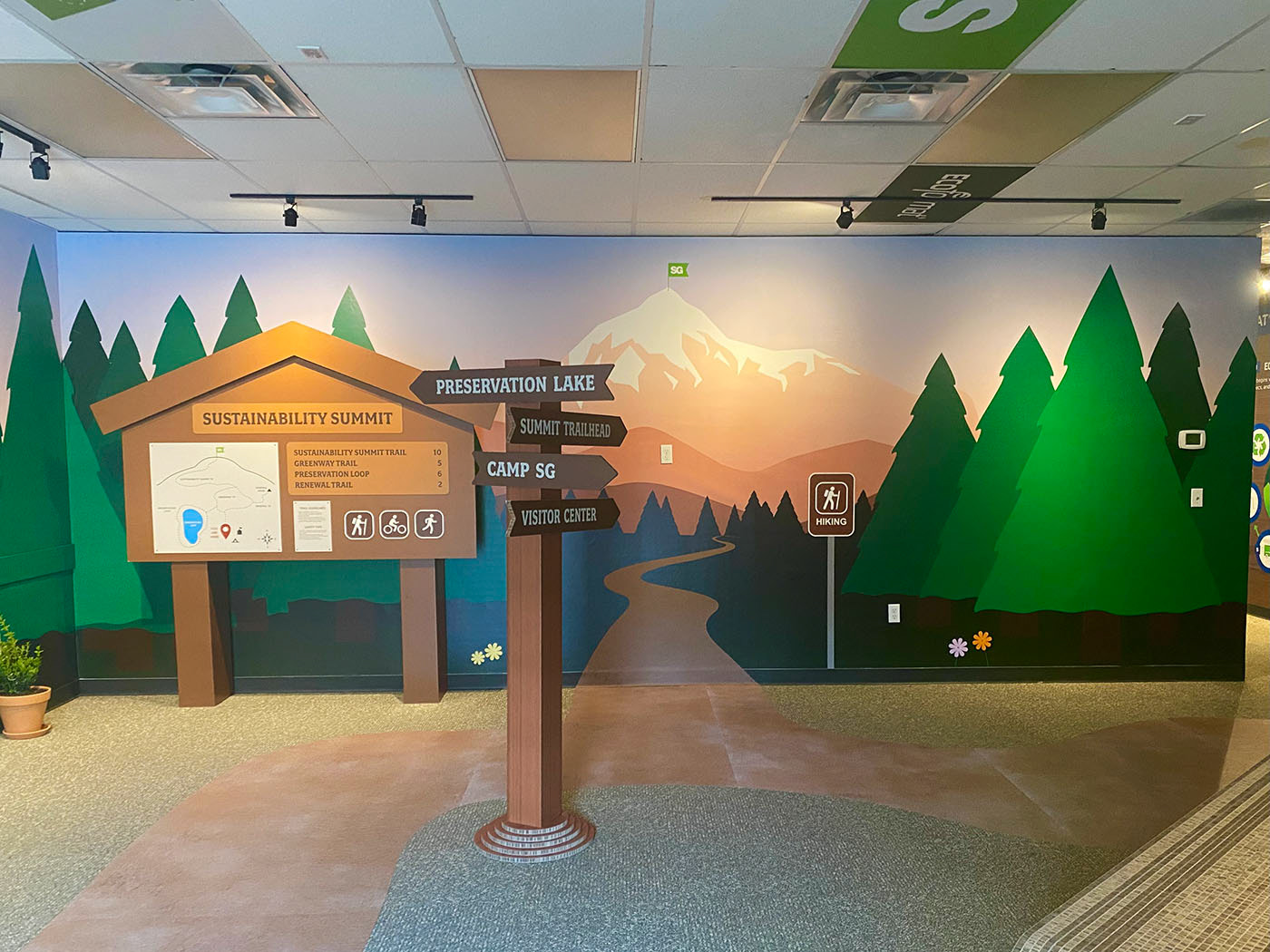
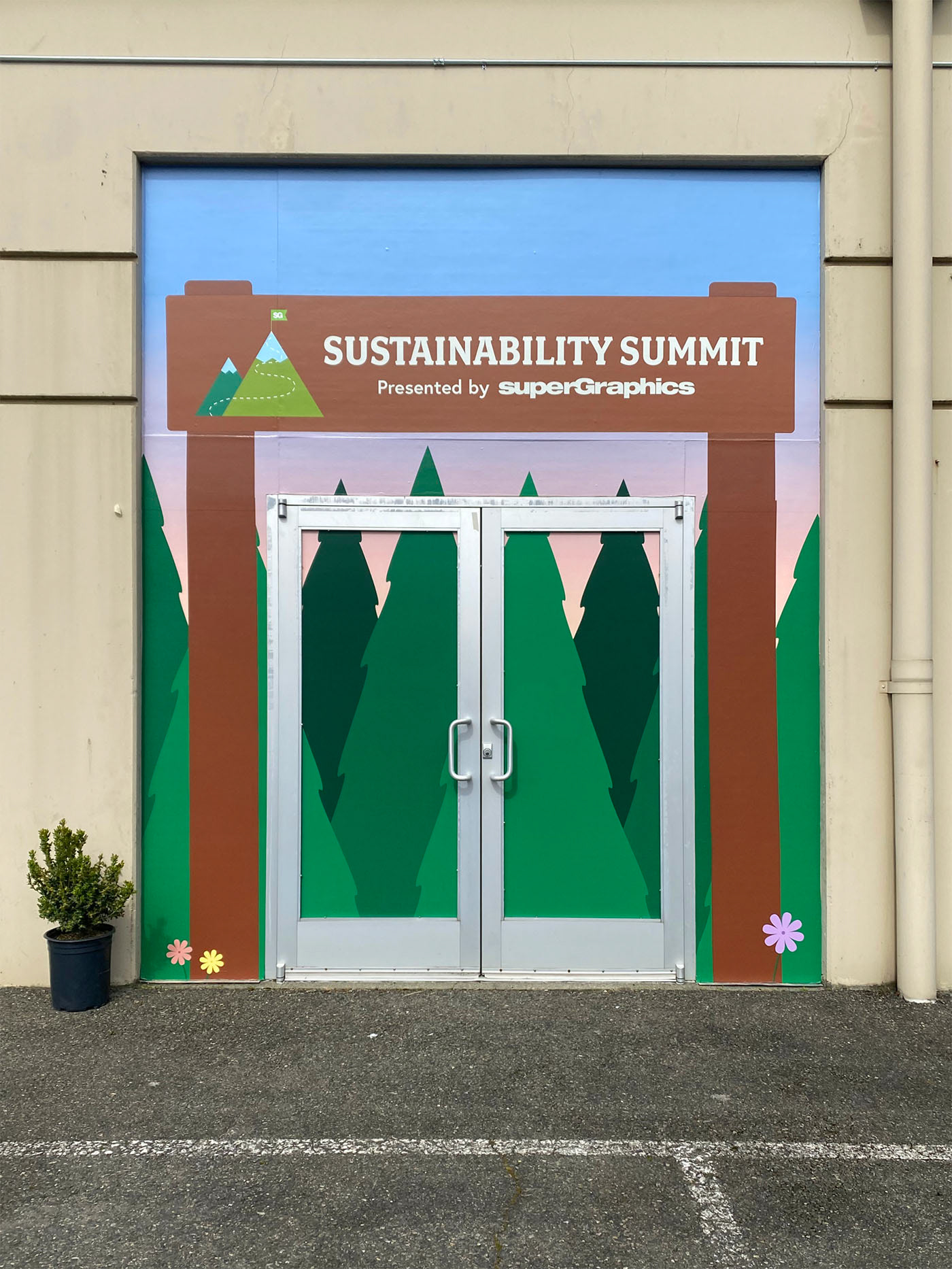
Project Overview: I was the lead designer for SuperGraphics' inaugural "Sustainability Summit," an experiential event developed to drive new business from sustainability-conscious clients. I designed a cohesive suite of environmental, event, and retail print applications, owning the project's brand identity, visual storytelling, and environmental design from concept to execution. My responsibilities included developing the core strategic concept, designing all event graphics, executing complex prepress, and leading the copywriting and design for all marketing collateral.
My Role: Lead Designer
Client: SuperGraphics
Team: Myself, Production Manager, Marketing Coordinator, Two Stakeholders (President, Sales Manager)
Timeline: 1.5 months, 2024
Tools: Adobe Illustrator, Adobe Indesign, Greenvelope, Constant Contact





1. The Challenge
In Q1 2024, SuperGraphics faced a common post-holiday sales slowdown. With our existing client base more quiet than usual, this presented an opportunity: we could proactively engage clients and deepen our position as a solutions partner.
To achieve this, the company president proposed a high-level directive: create an interactive showcase focusing on our sustainable print materials.
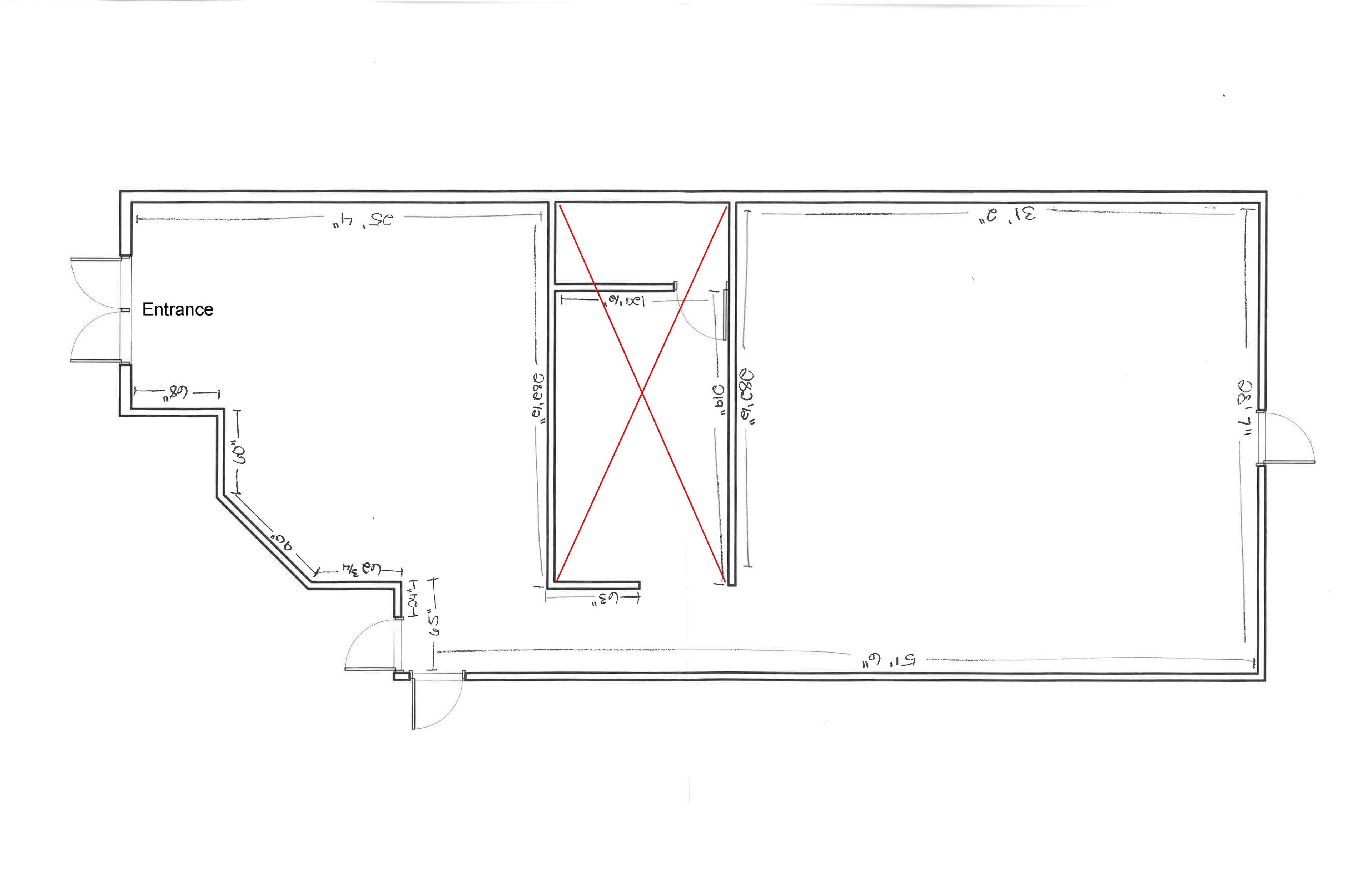
The team secured a vacant 950 sq. ft. facility across the street to host the event. This meant my task began with a multi-layered challenge:
• The Business Challenge: The sustainable material line was high-potential but underperforming with our existing client base. My task was to design an experience that could reverse this trend and generate real ROI.
• The Design Challenge: The 950 sq. ft. facility was a blank canvas with a divided floorplan, and dark navy walls that would need to be fully covered. I was tasked with transforming this empty space into a cohesive, premium brand experience from the ground-up.
• The Strategic Challenge: To speak to all our key clientele, I was tasked with showcasing distinct applications for three different industries (environmental, retail, and event) in one cohesive shared space.
To inform my creative direction and strategy, my first step was to investigate why the product line was underperforming in the first place.
2. The Discovery & Research
My research began with understanding the "why" behind the client hesitation around sustainability. To get unfiltered, data, I partnered with the sales team, as they are on the front lines and hear direct client objections.
From these interviews, we synthesized the feedback and uncovered two primary, actionable blockers:
• Quality & Performance Concerns: Clients were unsure how eco-friendly materials compared to industry-standard options like PVC. They worried about performance and visual appeal (would they look less refined?)
• Lack of Awareness: Many clients were simply unaware of the range and versatility of sustainable applications we offered, as it can always be a challenge to sell what people aren’t directly already looking for.
This research became the foundation for the entire project. The event couldn't just show materials; it had to demonstrate their premium quality and educate clients on their range and capabilities.
Based on this research, I defined the project's goals:
The Project Goals
• Drive new revenue from our existing client base by highlighting unique, sustainable offerings.
• Demonstrate the quality and versatility of eco-friendly materials in an immersive, hands-on environment.
• Position SuperGraphics as the definitive go-to partner for sustainable large-format print.
• Showcase applications for our key target industries (environmental, retail, and event) in one cohesive space.
• Execute the entire event from concept to launch within a tight 1.5-month timeline (to align with the company's slow season)
Key Performance Indicators (KPIs)
• Event Engagement: Target a high attendance rate and track client interactions (questions asked, samples taken).
• Sales & Business Impact: Measure the increase in sustainable material orders and the growth in customer lifetime value (CLV) from attendees post-event.
3. Ideation and Concept Development
The Core Spatial Problem
My ultimate challenge was figuring out how to showcase graphic applications across three different industry types (retail, environmental, event) within two connected rooms of roughly 950 sq. ft. I needed to get crafty with fitting all three into the space, which also had dark navy walls that needed to be fully covered and a skinny hallway connecting them. Plus, central items in the rooms would need to be moveable as we were planning on hosting a panel in the space.
Brainstorming a Unified Theme
To solve this, I first brainstormed multiple themes that could cohesively house all three industry verticals. My options included:
• A Ski Resort
• Seattle Aquarium
• Seattle Tourist for a Day
• PNW National Park
• Ferris Bueller’s Day Off
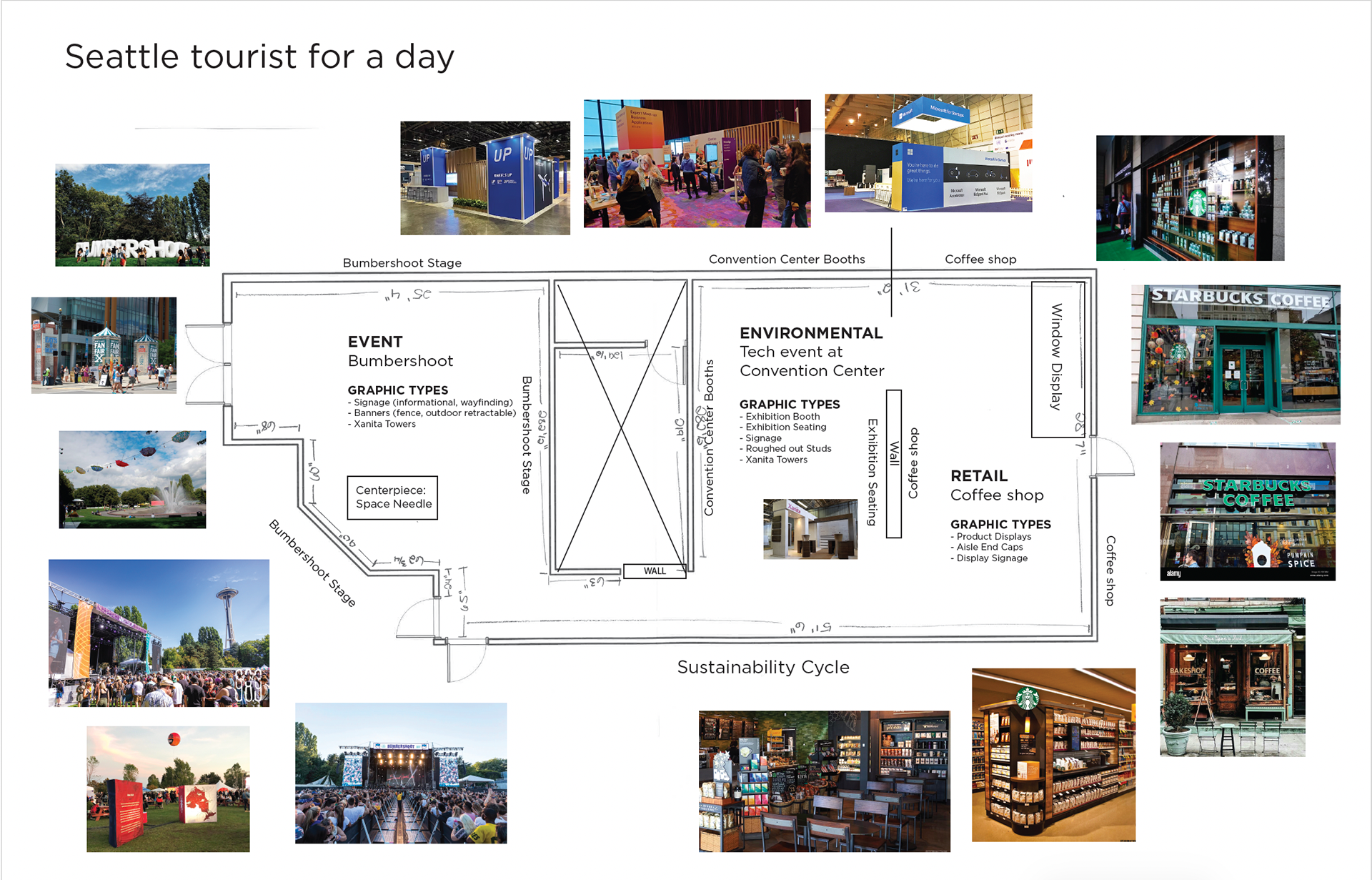
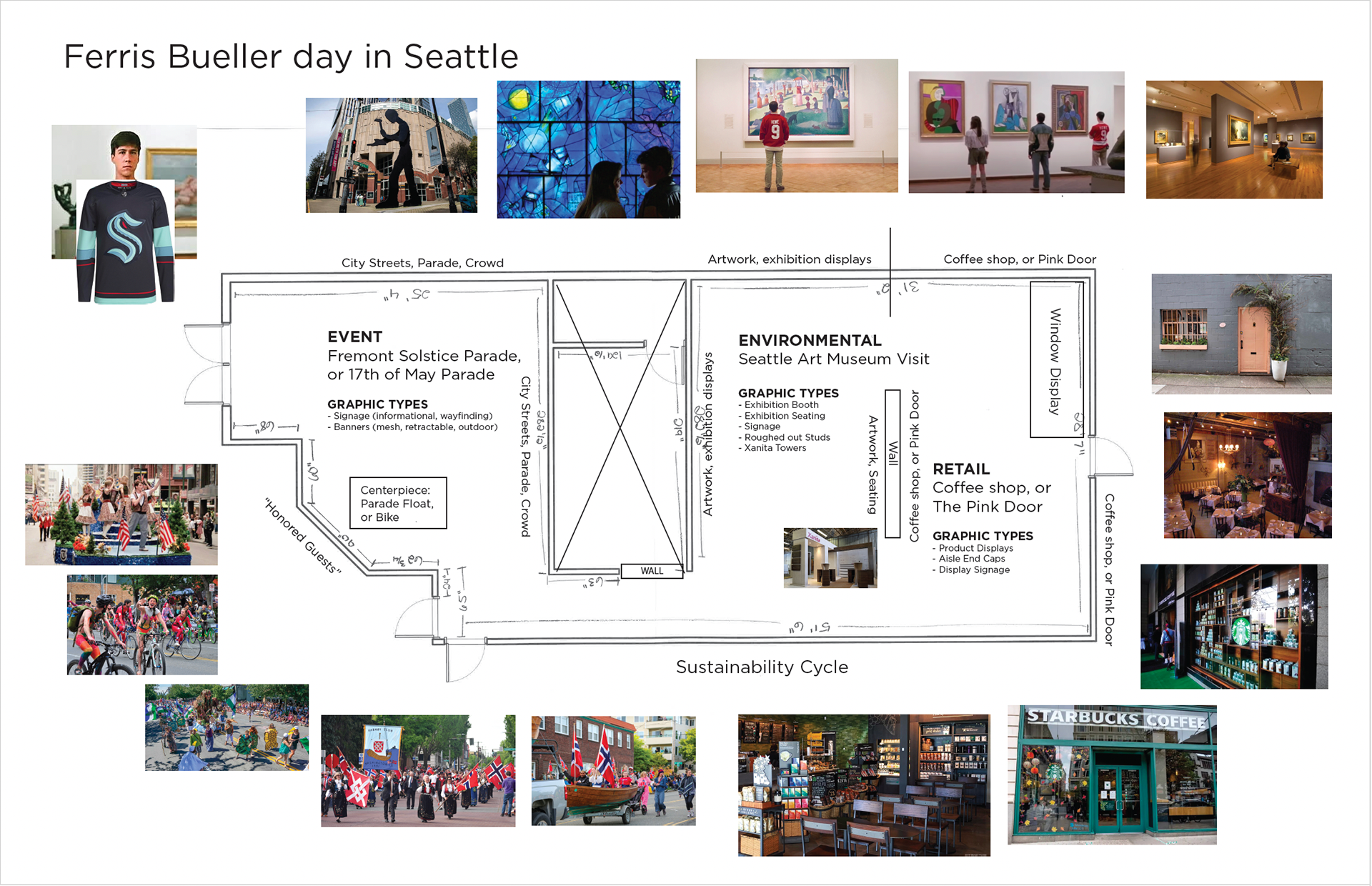
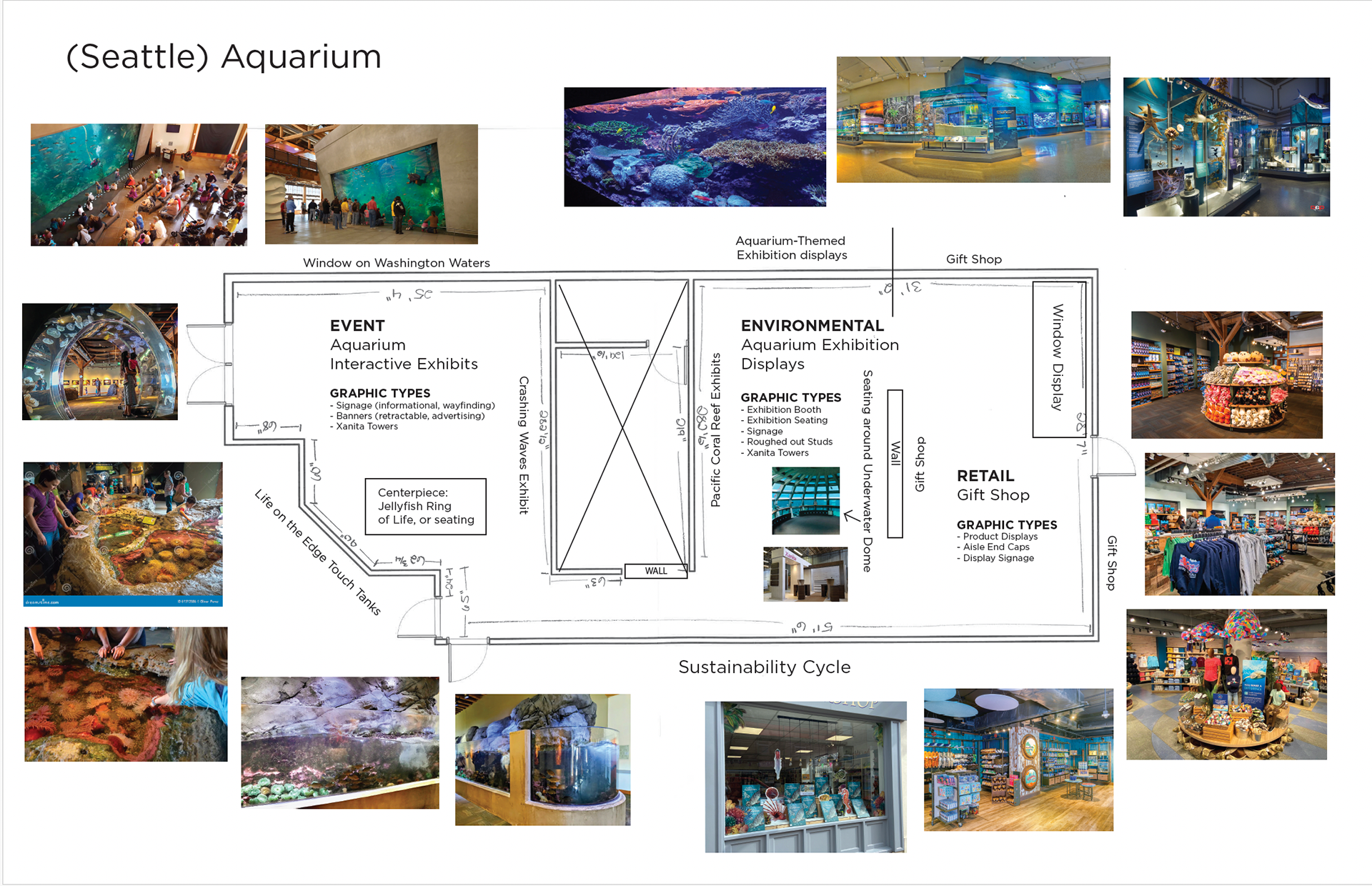
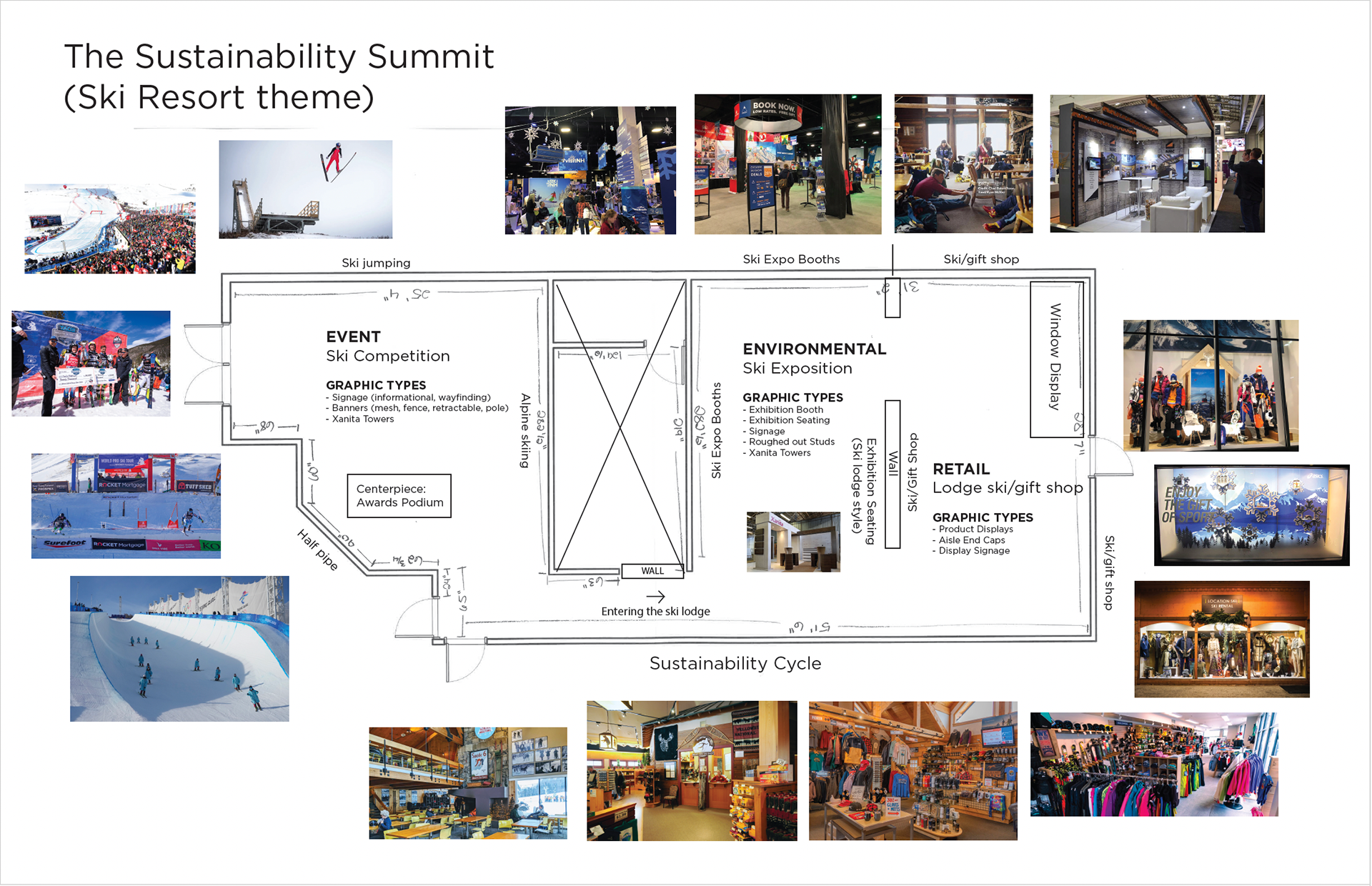
I mapped out how each theme would work with the three industries. For example, for the Ski Resort concept:
• Event: A "skiing competition" with informational signage, event banners, and wayfinding towers.
• Environmental: A "ski lodge" scenario with exhibition and branded displays.
• Retail: A "lodge gift shop" with product displays, end-caps, a coffee stand, and window graphics.
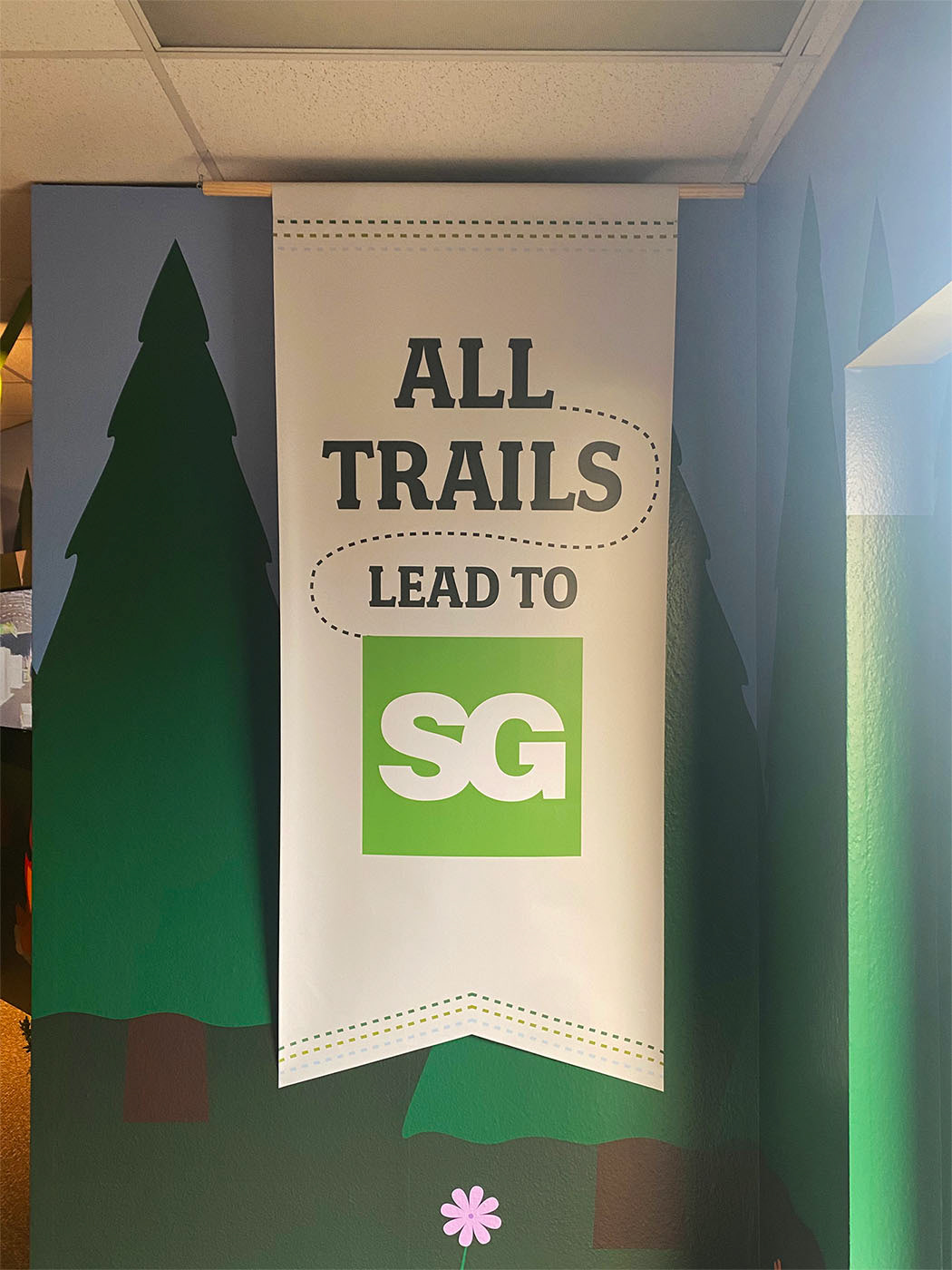
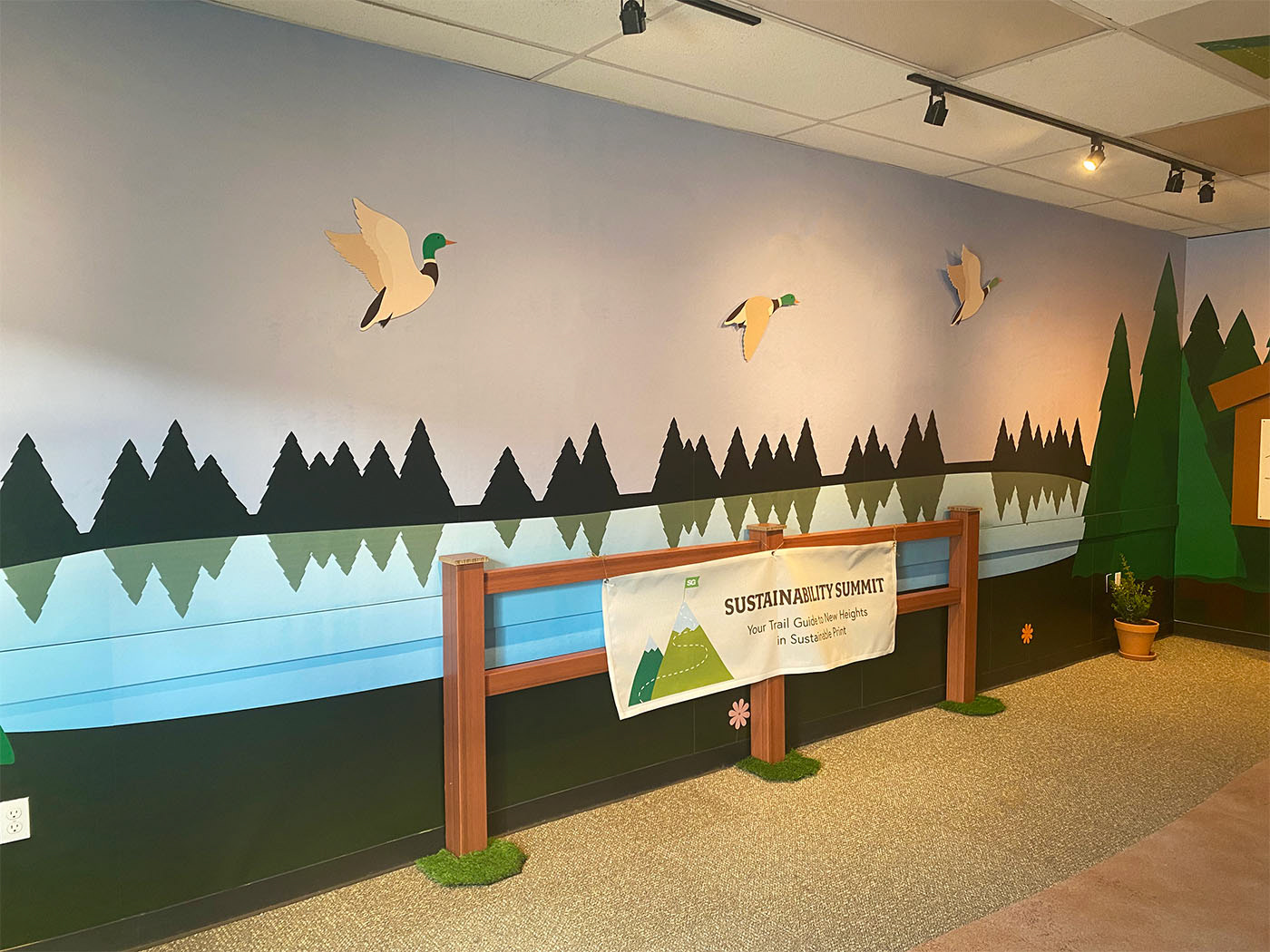
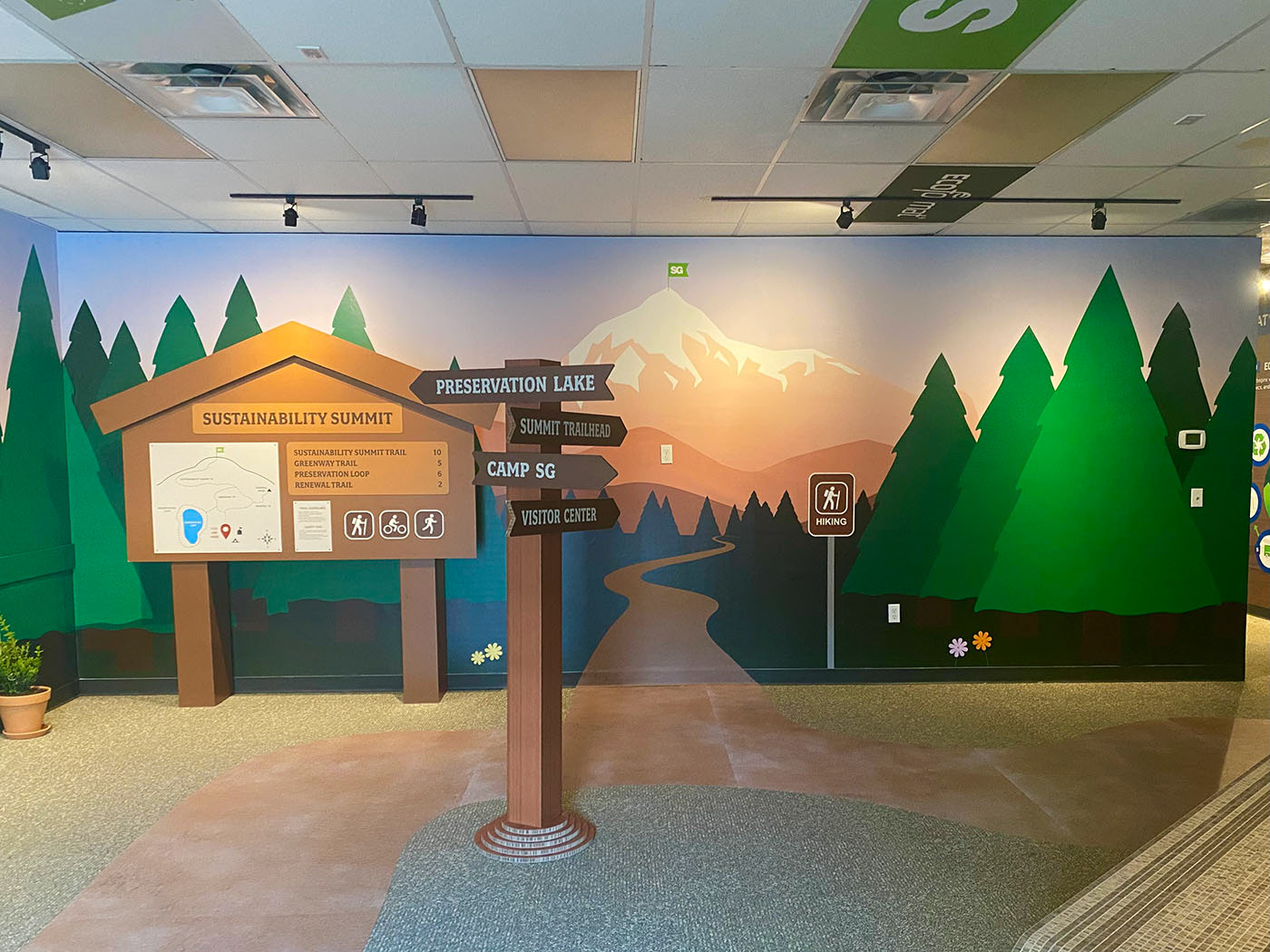
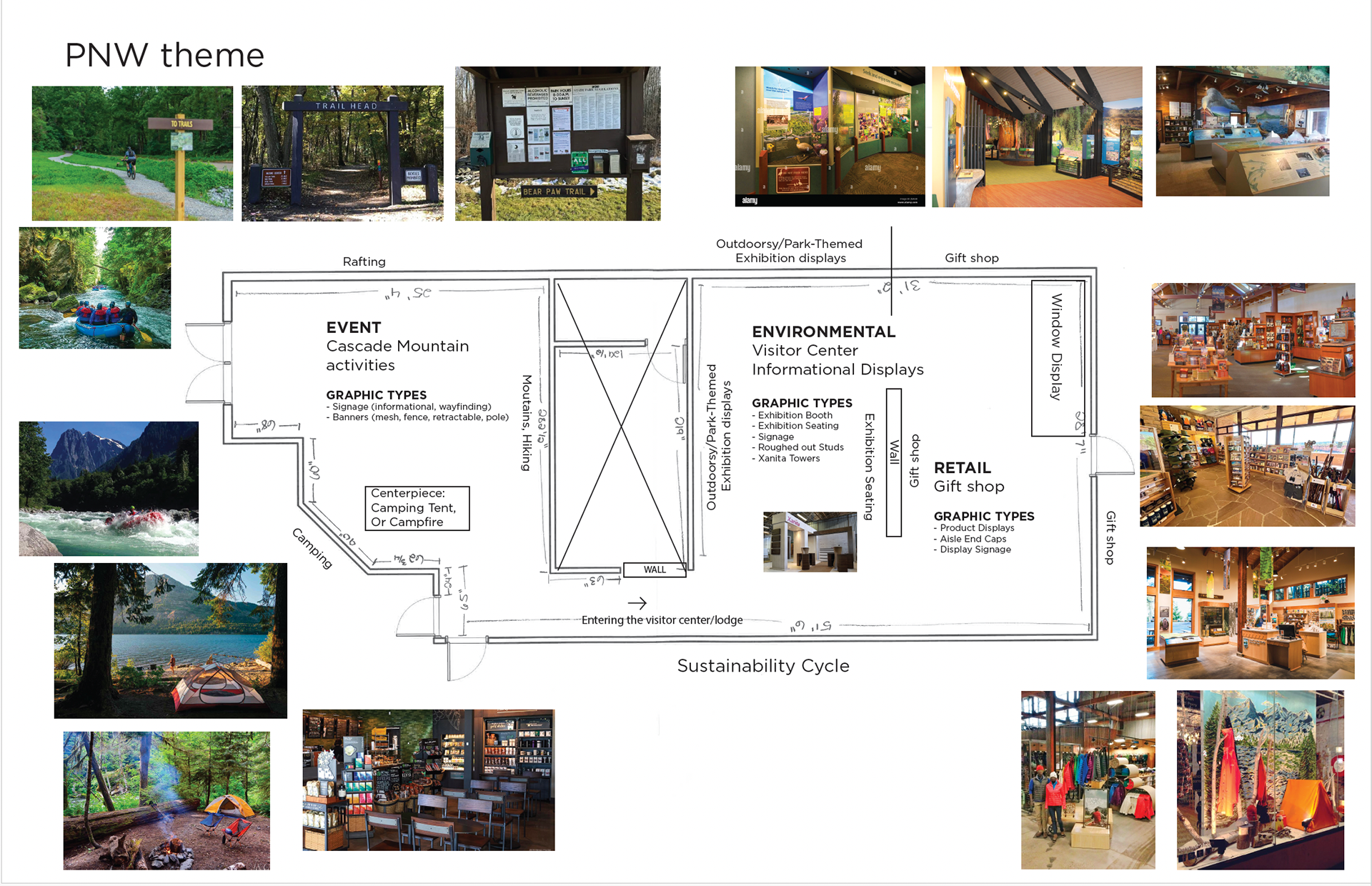
After receiving stakeholder feedback, we aligned on the PNW National Park theme. Being outdoorsy and educational, this aligned well with sustainability and SuperGraphics’ brand as a PNW-based large format printer. It also just felt fun, playful, and a fun escape for clients to enjoy a small day-trip away from their jobs.
Spatial Strategy & Journey Mapping
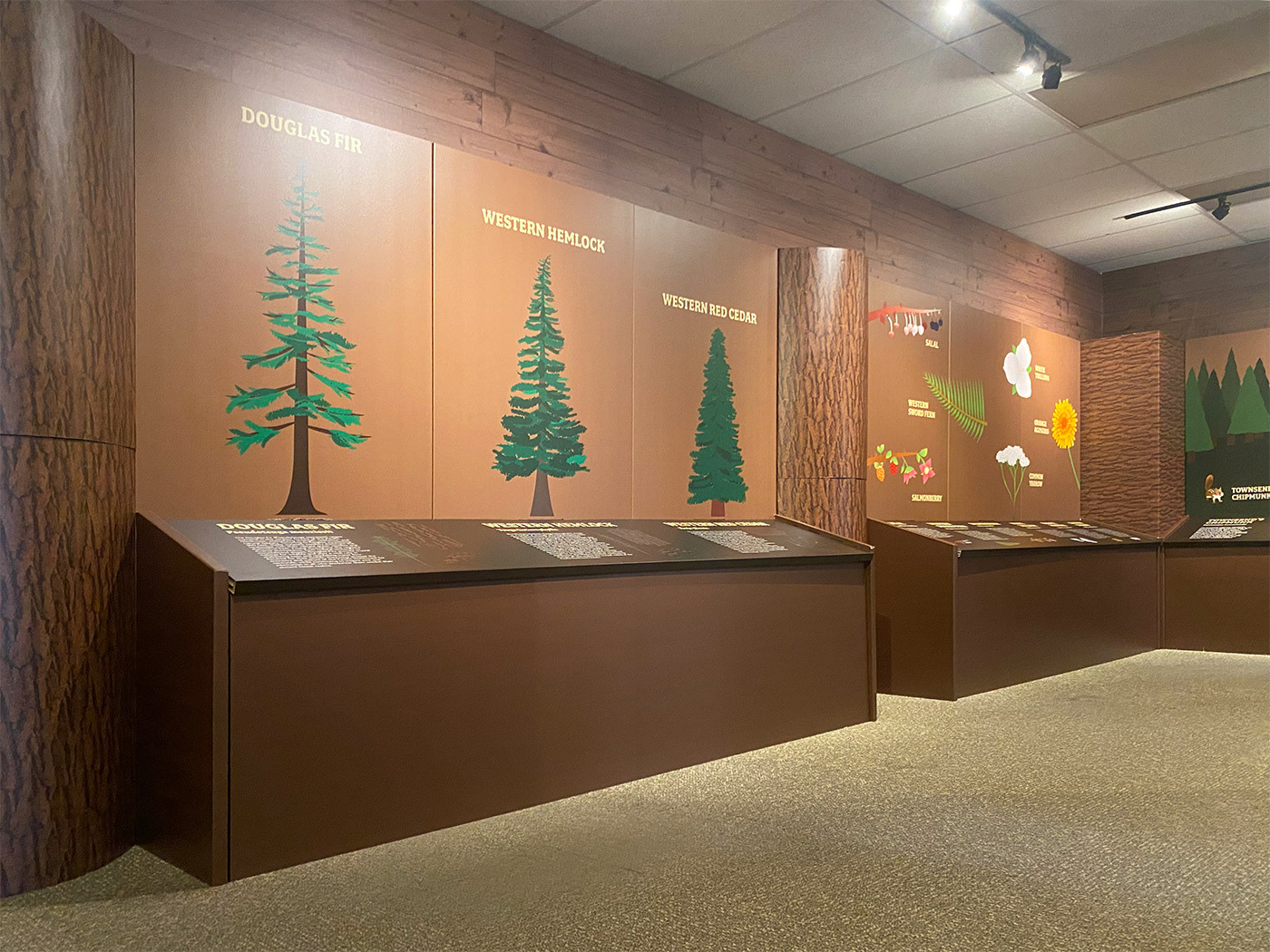
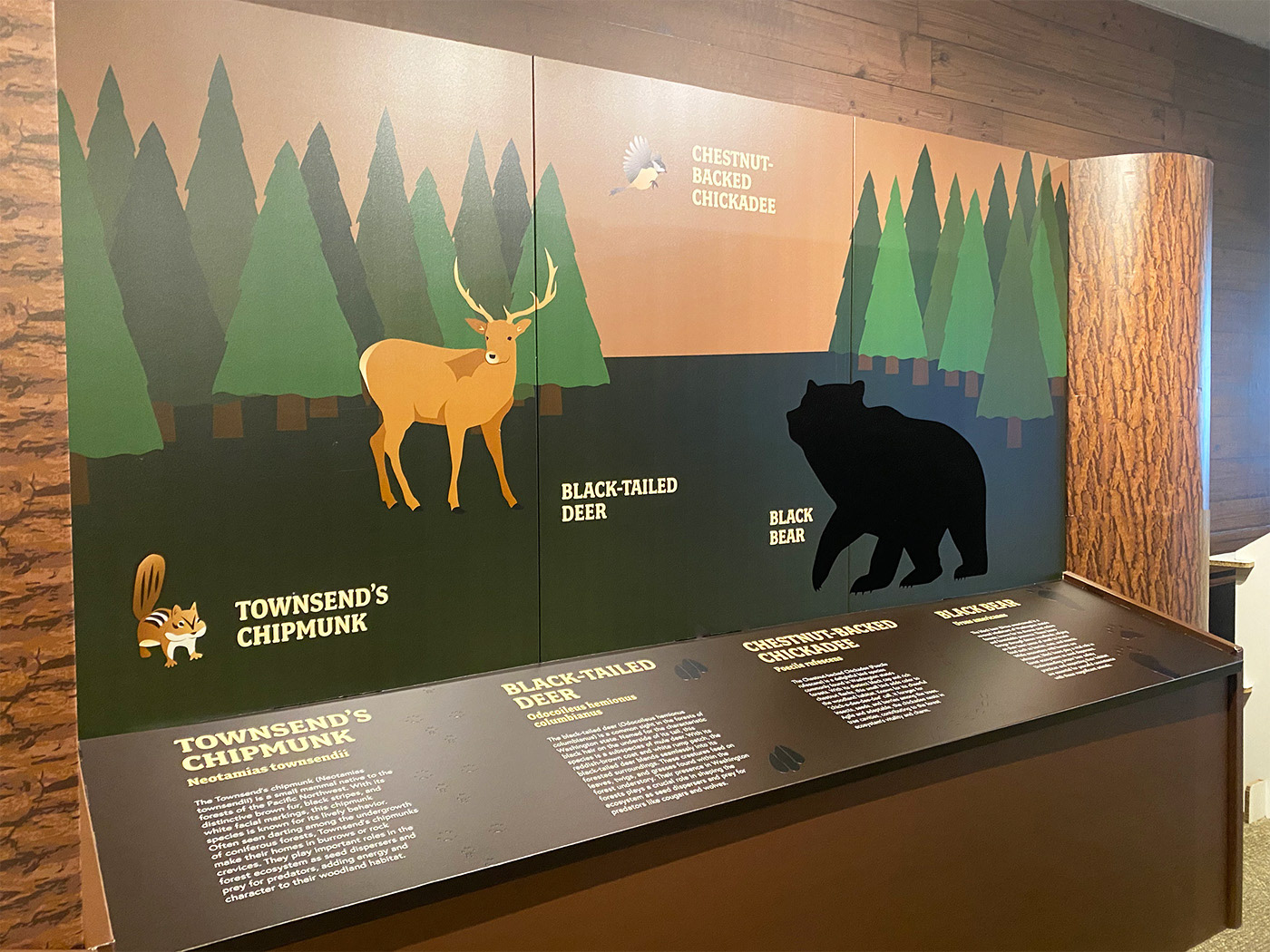
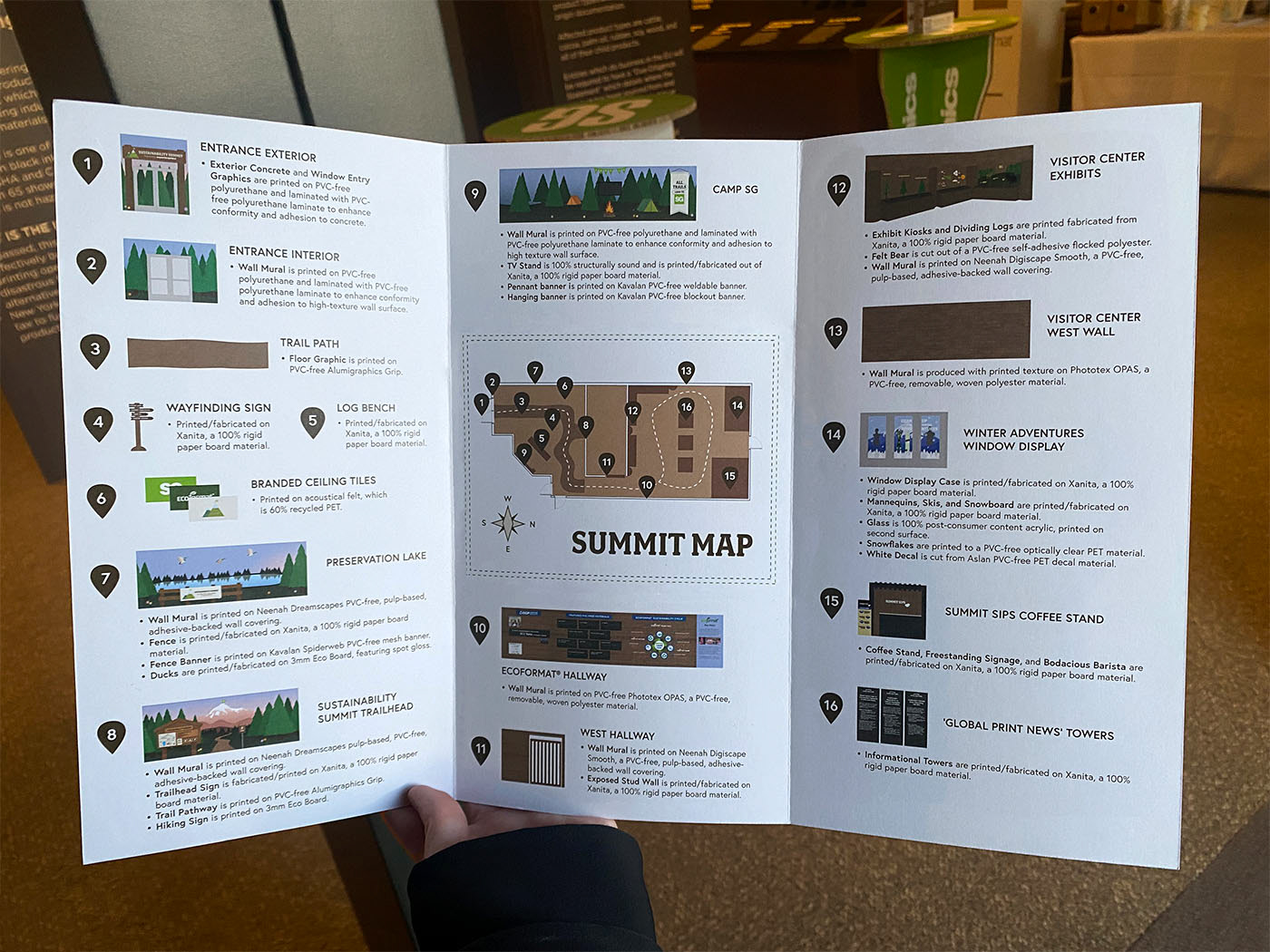
This mapping exercise helped me solve the spatial puzzle. Every wall needed to tell an important part of the story, while also being seamlessly connected to one another. To make sense of it all, I created a customer journey: the first room would be an "outdoor" scenario (ideal for event graphics), and once guests walked through the hallway, the second room would be an "indoor" space (perfect for retail and environmental solutions).
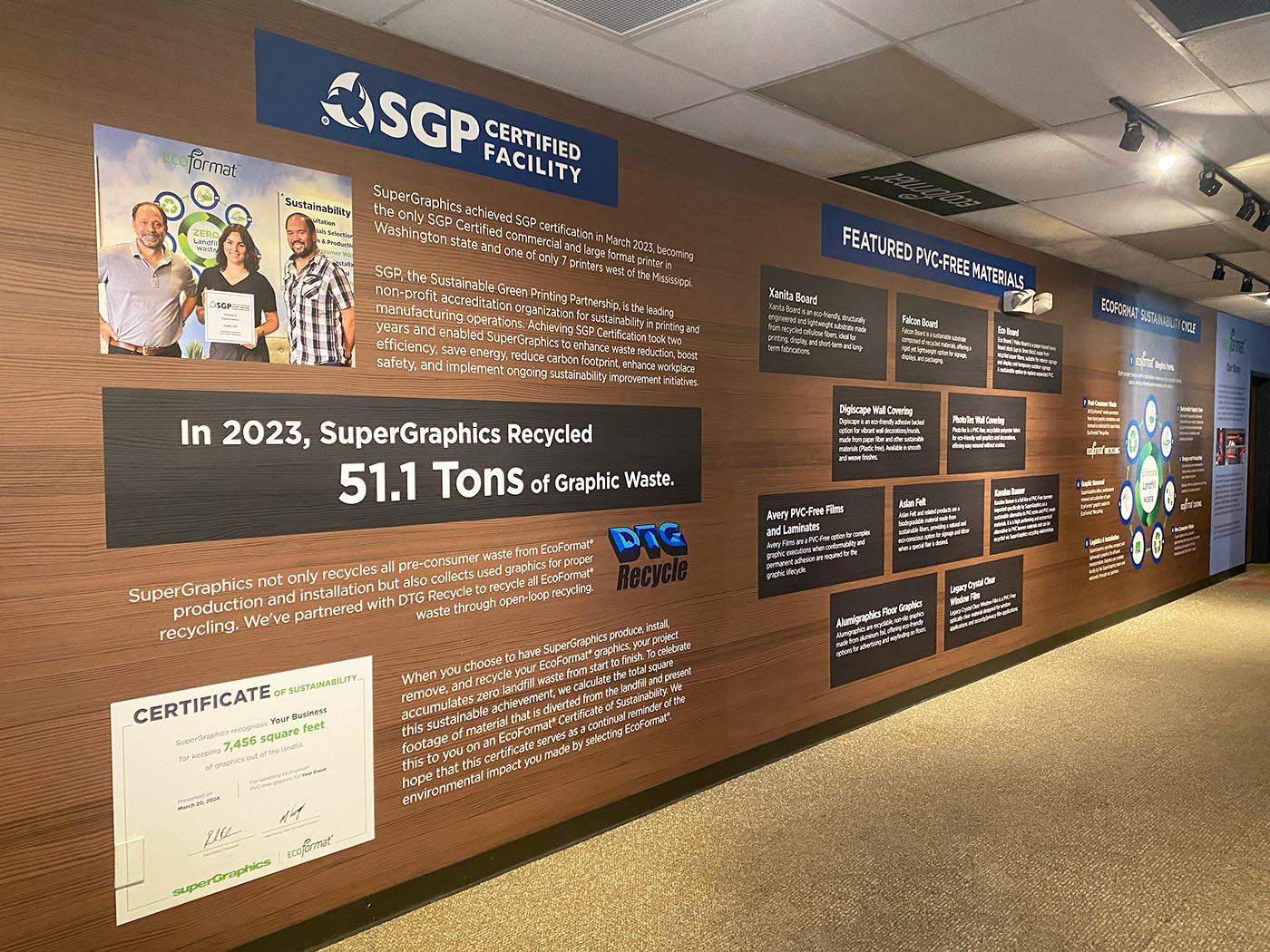
This concept also allowed me to strategically solve a stakeholder request: to use the bridging hallway as an educational space for our sustainability initiatives. This made the "journey" literal: guests were "guided" from the "outdoors," through an "educational path" (the hallway), and into the “indoor” space.
Prototyping
Before jumping into design, I finalized the list of rigid graphic installations with the sales team based on what capabilities and applications clients were expressing interest in. We chose them based on specific client needs and sales objections.
My core list of designed structures included:
• TV Stand & Bench: To demonstrate the weight-bearing capabilities of the rigid materials, a key concern for corporate event clients.
• False Wall with Exposed Studs: To showcase our fabrication capabilities (and to cleverly block an unusable closet).
• Window Display: To provide a direct, real-world application for our retail clients.
• Coffee Counter w/ Drop-Beam Ceiling: To highlight our complex engineering and fabrication chops with the materials.
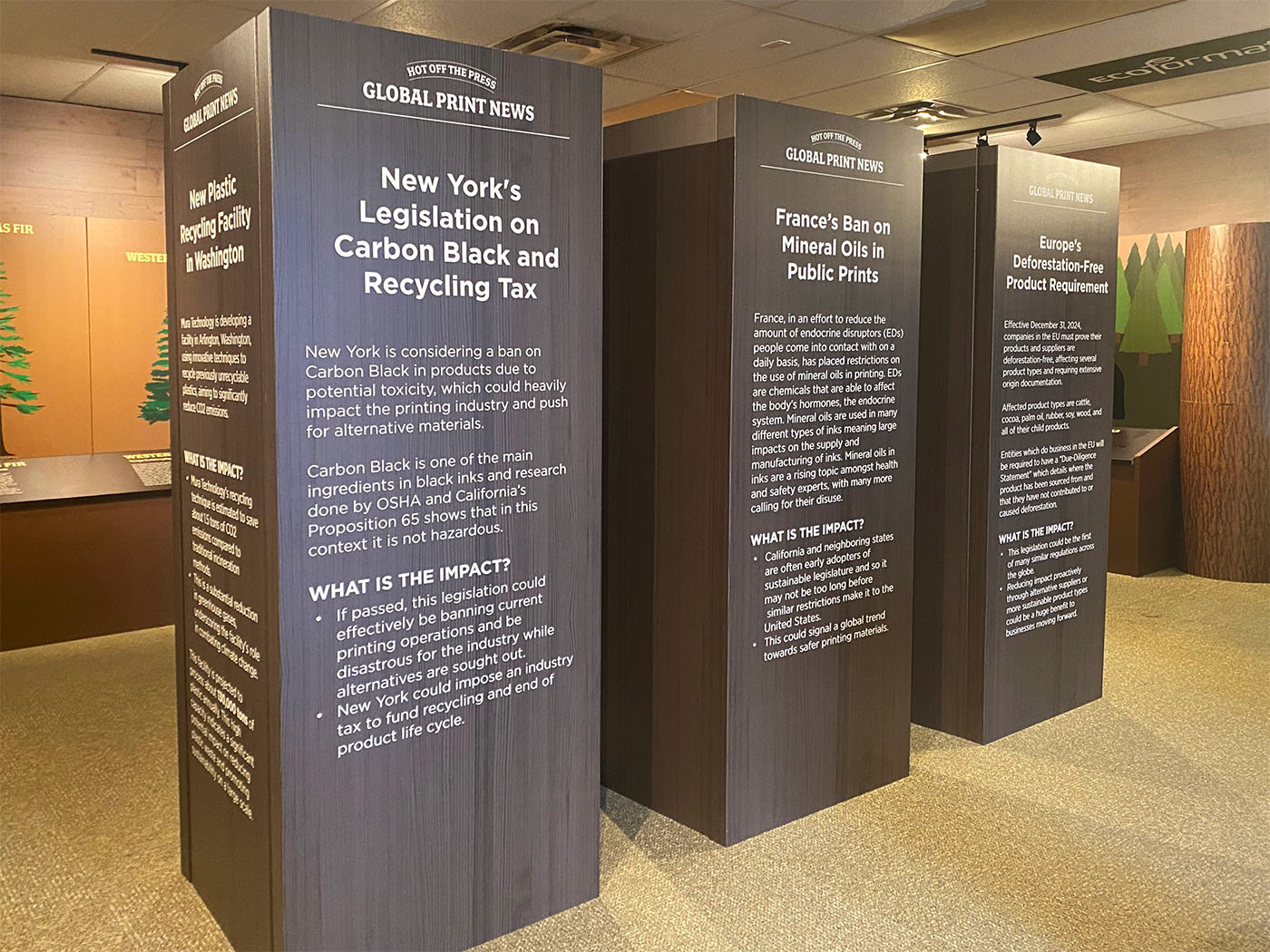
• Freestanding Towers: Our corporate event clients were very interested in freestanding columns for wayfinding.
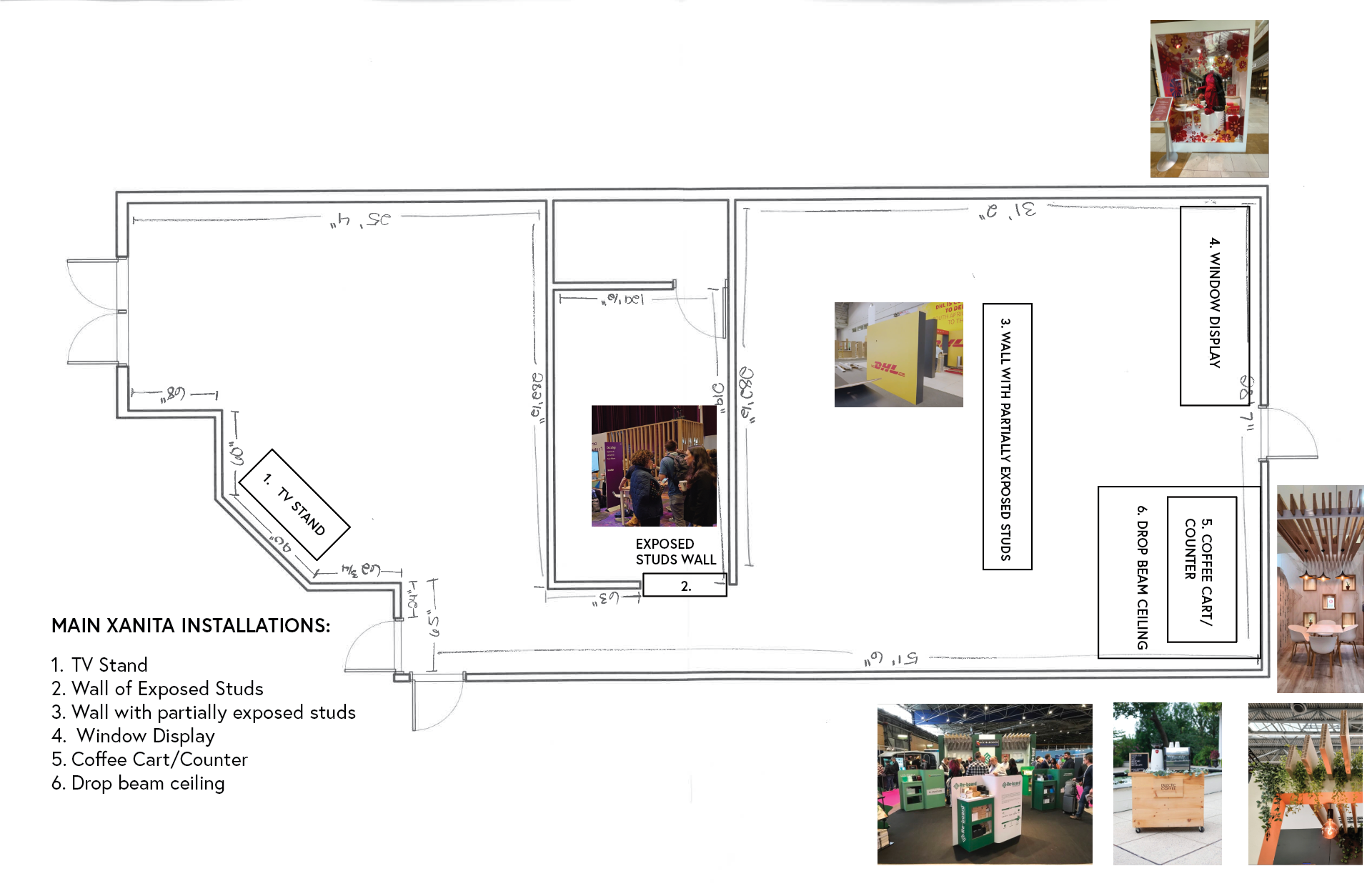
We partnered with Xanita, our sustainable rigid structure material of choice, to begin planning how the complex TV-Stand, Window Display, False Wall, and Coffee Counter applications could be engineered. Our production manager took on engineering the Bench and Freestanding Towers.